Low Bed Semi Trailers
Low Bed Semi Trailers
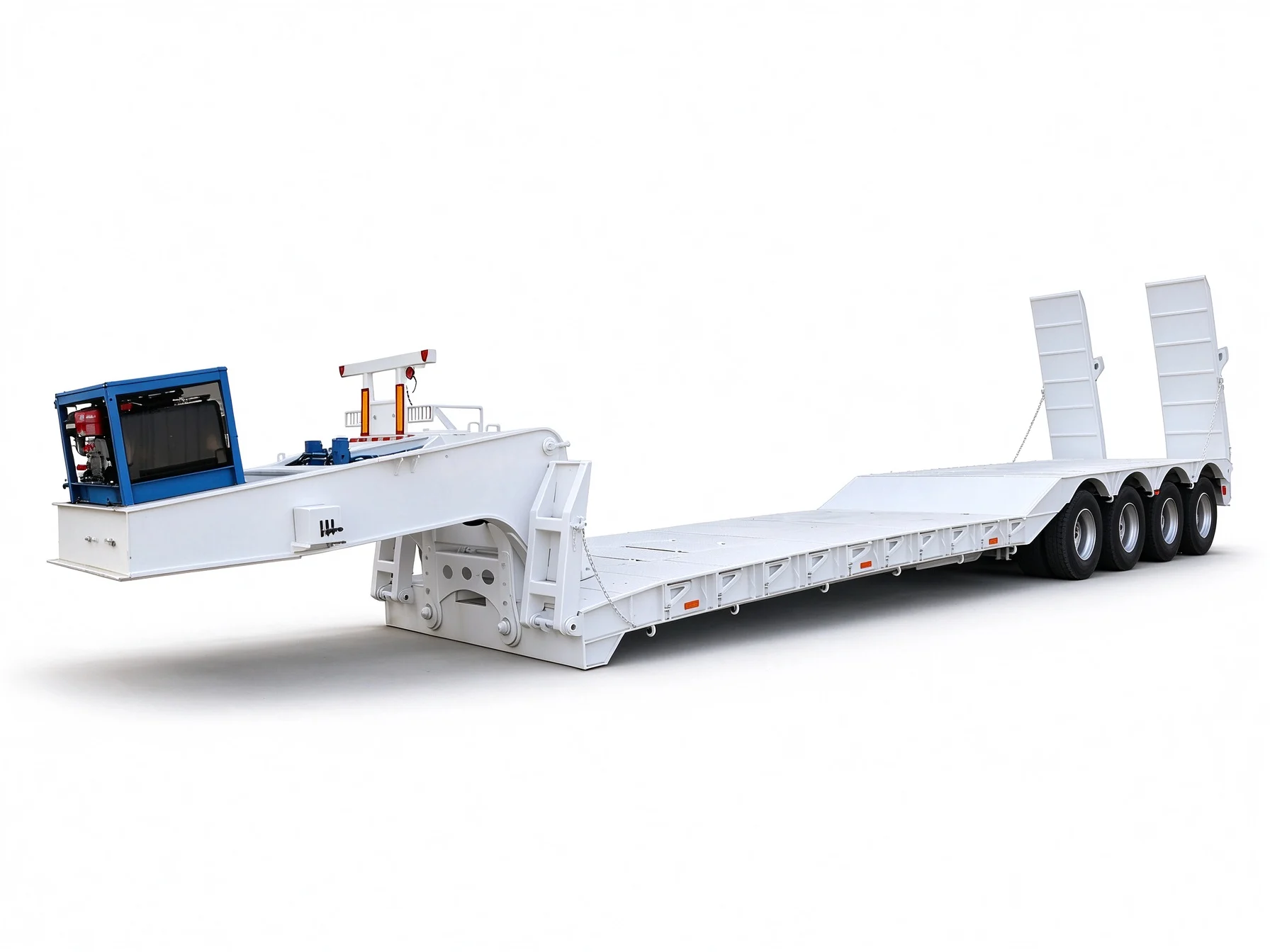
4 Axle 80T Heavy Duty Removable Lowbed Trailer
This 4-axle 80T heavy-duty removable lowbed trailer is specifically engineered for extreme road conditions and heavy machinery transportation.
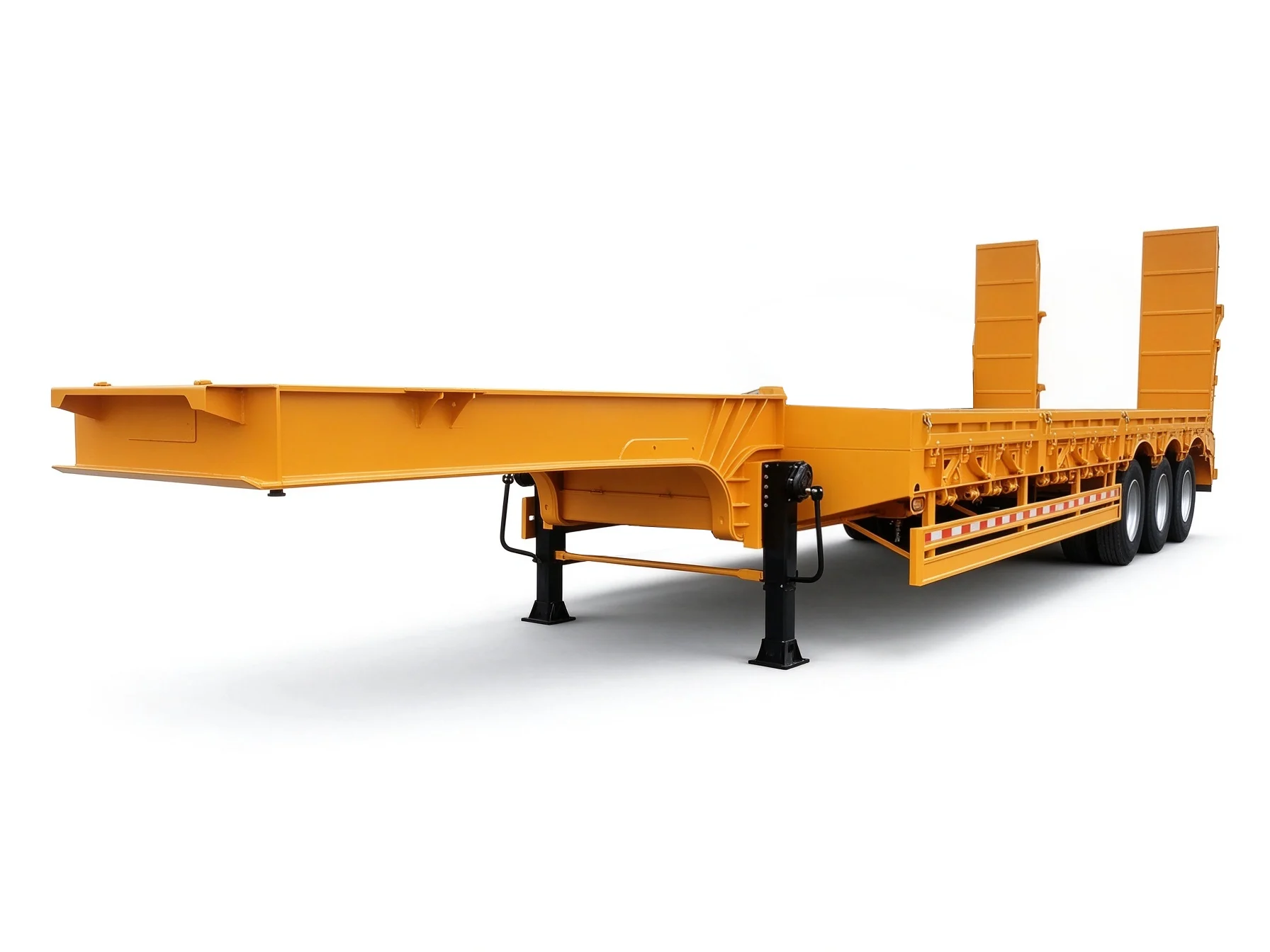
60 Ton 3 Axle Low Bed Semi Trailer
This 60-ton 3-axle low bed semi trailer features a 12,000 × 3,000 mm overall size, a Q355B steel main beam, a 4 mm anti-slip steel floor, and a mechanical suspension system.
TONGYA Low Bed Semi Trailers
Low-deck semi-trailers for machinery and equipment transport, with loading access and support positions matched to the machine.
Machine footprint. Supply the machine weight, track or tyre footprint and the position of concentrated loads. Attach a dimensioned transport drawing where available.
Loading and route. Describe how the machine reaches the deck. Check the most restrictive bends, ground clearance and overhead limitations on the planned route.
Request a quotation ↗Frequently asked questions
What is the role of a low loading deck?
It provides a platform for machinery while helping manage the complete loaded height. The suitable deck layout still depends on the machine supports and route.
How is the machine supported on the trailer?
Track, tyre or support positions define where the load reaches the deck. Those positions are reviewed with machine mass and the proposed structural layout.
What determines the loading access arrangement?
Machine ground clearance, approach geometry and whether it moves under its own power influence the ramp and access review.
What loading information should I provide?
Describe whether machinery reaches the deck under its own power or is positioned by external handling equipment. Include the site clearances and the loading requirements supplied by the responsible operator.
Can I request ramps or a different loading arrangement?
State the machine type and the access arrangement required by your operation. Ask for feasibility, supplied components and dimensional effects to be confirmed for the exact proposed configuration.
Which route restrictions should accompany the inquiry?
Provide the route information available on overhead clearance, width, turning space and access points. Identify permit or escort requirements with your local transport adviser before confirming the transport arrangement.
What tractor information is needed?
Supply tractor configuration, coupling dimensions and brake and electrical interfaces. Include the intended load and route restrictions so the complete combination can be reviewed.
How should multiple machines be covered in one request?
Submit separate loading sketches for each machine or combination, including masses and support positions. Ask the proposal to identify which cases were reviewed and which need further assessment.
What should I request for securing heavy equipment?
Provide the restraint requirements prepared for your transport operation and show the requested attachment locations. Ask the quotation to identify the provisions supplied with the trailer and any buyer-supplied equipment.
How do I compare lowbed trailer proposals?
Compare usable deck dimensions, loading arrangement, machinery assumptions, running gear and included accessories. Request a dated specification and drawings for the actual configuration behind each quotation.
What should be agreed before acceptance?
List the dimensional checks, configuration checks and documents required against the approved drawings. Confirm any inspection or witnessing arrangements and the information needed for your operator's transport planning.
What should an export inquiry include?
Provide the destination, receiving location, required quantity and handover preference. Ask for delivery terms, shipping preparation, included documents and proposed dispatch timing to be stated in the quotation.
Send an inquiry
Describe your application and where the equipment will be used.
Contact via WhatsApp ↗