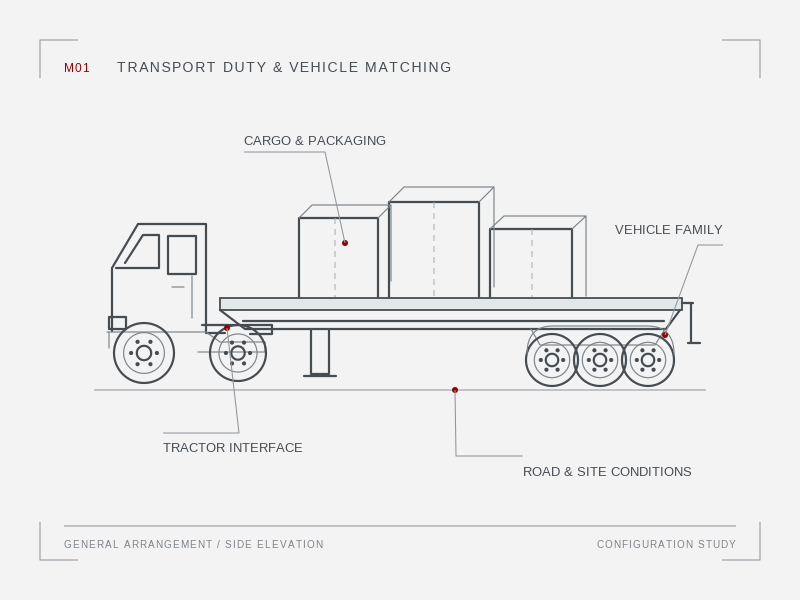
Load & body
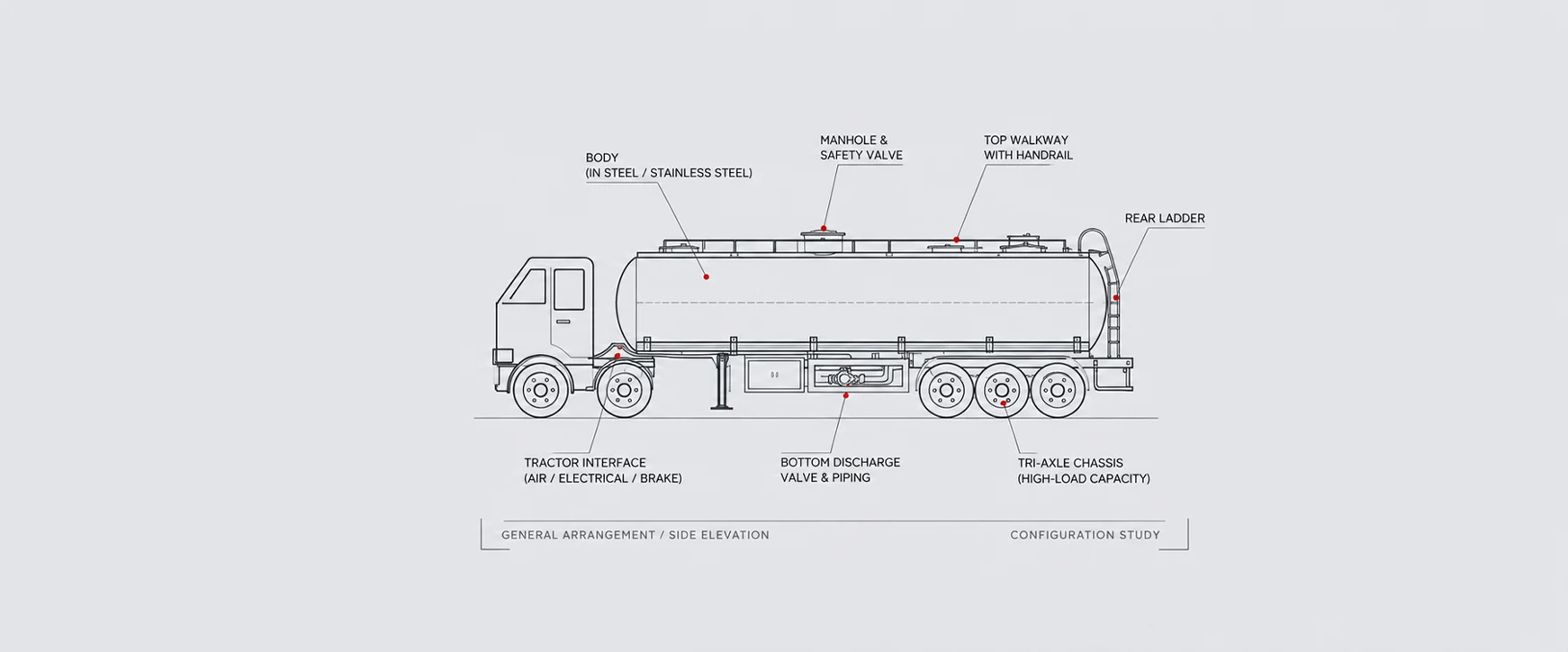
Tank volume, compartment layout, deck space or tipping-body arrangement.

Match the tank, cargo body, chassis and working equipment to your load, route and tractor.
Customization is the connection between the work a trailer performs and the way it is built. Fuel type and delivery pattern shape a tanker layout; powder handling shapes the discharge system; cargo access and load distribution shape a platform, fence or tipping body.
Dimensions, component preferences and operating connections are reviewed together. The selected options are brought into the proposal so the production drawing describes a complete vehicle rather than a list of unrelated changes.
Tank volume, compartment layout, deck space or tipping-body arrangement.
Axles, suspension, tractor coupling and the interfaces used during work.
Loading openings, service access, external protection and fleet identification.
Define what the trailer will carry, how it will be loaded and where it will operate. These inputs connect the vehicle family with the load, route and tractor interfaces.
Use these design topics to connect your cargo and operating conditions with the parts of the trailer that can be specified. The relevant choices depend on the product family.
Start with the platform that fits the job.
Explore the range ↗Confirm the equipment and interfaces in the approved specification.
Inside the factory ↗15 modules · select a module to explore the parameters
| Parameter for review | What it affects |
|---|---|
| M01-01Cargo or transported medium | Sets the starting point for vehicle type, material compatibility, structure and safety-system review. |
| M01-02Cargo form & packaging | Informs the loading surface, enclosure and restraint arrangement. |
| M01-03Individual cargo dimensions | Guides deck or body dimensions and whether an extendable layout needs review. |
| M01-04Individual load & total cargo weight | Establishes the required payload and the structural loading conditions to assess. |
| M01-05Cargo density or required volume | Connects the requested body, tank or silo volume to the permitted load. |
| M01-06Cargo centre of gravity & placement | Affects stability and the proposed distribution of load across the vehicle. |
| M01-07Roads, terrain & operating sites | Informs suspension, ground clearance, manoeuvrability and protection requirements. |
| M01-08Tractor & connection details | Checks fifth-wheel height, kingpin and pneumatic and electrical interface compatibility. |
| Parameter for review | What it affects |
|---|---|
| M02-01Design payload | Provides a common load basis for the frame, axles, tyres and braking specification. |
| M02-02Target unladen weight | Affects usable payload and the operating trade-off between equipment weight and duty. |
| M02-03Technical gross mass | Defines the proposed structural design envelope, separately from local permitted operating mass. |
| M02-04Design kingpin load | Links gooseneck and kingpin loading to the proposed tractor combination. |
| M02-05Design axle-group load | Informs axle count, axle spacing and suspension selection. |
| M02-06Design load per axle | Connects each axle's duty with tyre and brake ratings. |
| M02-07Localised or concentrated loads | Identifies where main beams, cross-members and local reinforcement need specific review. |
| M02-08Distributed deck or floor load | Informs floor material, thickness and cross-member spacing for the intended loading pattern. |
| Parameter for review | What it affects |
|---|---|
| M03-01Overall length | Balances cargo accommodation, route restrictions and turning space. |
| M03-02Overall width | Connects cargo fit with destination limits and access along the route. |
| M03-03Overall height | Affects height clearance, internal space and vehicle stability considerations. |
| M03-04Wheelbase | Influences load distribution and the space needed to turn. |
| M03-05Axle spacing | Connects axle-group loading with the applicable destination requirements. |
| M03-06Fifth-wheel or coupling height | Checks tractor matching and the intended running attitude of the trailer. |
| M03-07Loading deck height | Affects loading access, ramp approach and total loaded height. |
| M03-08Minimum ground clearance | Helps assess suitability for uneven roads and operating sites. |
| M03-09Turning radius & swept path | Supports access planning for urban routes, ports and construction sites. |
| Parameter for review | What it affects |
|---|---|
| M04-01Frame configuration | Establishes the relevant flat-deck, gooseneck, lowbed or modular layout for review. |
| M04-02Main-frame material grade | Affects the balance of strength, unladen weight and durability. |
| M04-03Main-beam section & depth | Connects bending demands with the required deck height and structural layout. |
| M04-04Main-beam upper flange dimensions | Forms part of the review of compressive loading and overall beam strength. |
| M04-05Main-beam web thickness | Relates to shear loading and local structural stability. |
| M04-06Main-beam lower flange dimensions | Forms part of the review of tensile loading and fatigue performance. |
| M04-07Cross-member material & section | Supports floor-load assessment and transverse stiffness requirements. |
| M04-08Cross-member spacing & arrangement | Affects the response of the floor to concentrated loads and repeated use. |
| M04-09Local reinforcement & joint specification | Addresses loading around the gooseneck, suspension, landing gear and other force-transfer points. |
| Parameter for review | What it affects |
|---|---|
| M05-01Number of axles or axle lines | Connects load capacity, axle-load distribution and manoeuvrability. |
| M05-02Axle brand | Considers buyer preferences, destination service coverage and replacement-parts access. |
| M05-03Axle model | Checks the required load rating, braking arrangement and installation interfaces. |
| M05-04Technical capacity per axle | Provides the axle-rating basis for the proposed duty and load assessment. |
| M05-05Axle construction | Reviews rigid, drop, steering, oscillating or independent arrangements where relevant to the selected model. |
| M05-06Wheel track | Affects stability, overall width and tyre placement. |
| M05-07Axle positions & group arrangement | Influences weight distribution and handling of the vehicle combination. |
| M05-08Wheel-end interfaces & maintenance | Defines the hub, bearing, lubrication and service arrangements to confirm. |
| Parameter for review | What it affects |
|---|---|
| M06-01Suspension type | Reviews mechanical, air, single-point, bogie or hydraulic layouts for the intended vehicle and route. |
| M06-02Suspension brand & model | Connects capacity requirements with service and parts availability. |
| M06-03Rated suspension capacity | Matches the proposed axle-group duty and durability requirements. |
| M06-04Design ride height | Affects trailer attitude, deck height and ground clearance. |
| M06-05Leaf-spring or air-spring specification | Balances load support, ride characteristics and road conditions. |
| M06-06Lifting & height-adjustment range | Relates to loading access, obstacle clearance and levelling needs where the system permits adjustment. |
| M06-07Steering system | Reviews self-steering, forced, hydraulic or mechanical steering where applicable to the model. |
| M06-08Steering angle, locking & centring | Connects the required turning space with directional stability during travel. |
| Parameter for review | What it affects |
|---|---|
| M07-01Tyre size | Affects load rating, deck height and ground-clearance requirements. |
| M07-02Tyre ply rating or load index | Checks the rating of each tyre against the proposed load. |
| M07-03Tyre speed rating | Connects tyre selection with intended operating speed and heat exposure. |
| M07-04Tread pattern & application | Considers highway, quarry, gravel and muddy-road operating conditions. |
| M07-05Single or twin tyres & tyre count | Affects load distribution, unladen weight and maintenance needs. |
| M07-06Wheel size & material | Checks tyre compatibility and the weight and durability of the wheel arrangement. |
| M07-07Spare-tyre quantity & mounting | Balances roadside support needs with the available mounting space. |
| Parameter for review | What it affects |
|---|---|
| M08-01Kingpin size & standard | Checks compatibility with the tractor's fifth wheel. |
| M08-02Kingpin position | Affects front swing clearance and weight distribution. |
| M08-03Kingpin mounting or flange type | Connects structural requirements with inspection and maintenance access. |
| M08-04Design coupling height | Matches the tractor and the intended attitude of the complete combination. |
| M08-05Landing-gear brand & model | Considers operating preferences, servicing and the buyer's component standard. |
| M08-06Landing-gear rating & mounting height | Checks stationary support requirements and ground clearance. |
| M08-07Footplates, crank & connecting shaft | Relates to ground conditions and access for routine operation. |
| Parameter for review | What it affects |
|---|---|
| M09-01Drum or disc brakes | Frames the review of braking duty, service requirements and operating costs. |
| M09-02Brake dimensions | Relates to the required braking force and thermal capacity. |
| M09-03ABS or EBS arrangement | Checks destination requirements and compatibility with the tractor's braking system. |
| M09-04Sensor & modulator layout | Defines the multi-axle control arrangement and related stability functions to review. |
| M09-05Brake-valve brand & model | Considers required functions, buyer preferences and destination service support. |
| M09-06Brake chambers or actuators | Connects the actuator specification with service and parking-brake duty. |
| M09-07Air-reservoir capacity & placement | Relates to system response, available space and applicable installation requirements. |
| M09-08Air couplings, hoses & lines | Checks tractor interfaces and suitability for the operating environment. |
| M09-09Stability, lift-axle & wear monitoring | Reviews relevant roll-stability, traction-assist and maintenance-warning functions where supported. |
| Parameter for review | What it affects |
|---|---|
| M10-01System voltage | Checks compatibility with the tractor and auxiliary equipment. |
| M10-02Electrical connectors & pin standards | Matches the tractor interface and destination connection requirements. |
| M10-03Lamp type & brand | Considers visibility, durability and servicing needs. |
| M10-04Lamp quantity & positions | Connects the lighting layout with vehicle dimensions and applicable market requirements. |
| M10-05Work, reversing & warning lights | Addresses visibility during night work, loading and site manoeuvres. |
| M10-06Wiring protection & connector sealing | Considers exposure to rain, dust and corrosive environments. |
| M10-07Cameras & reversing assistance | Helps define blind-spot awareness and site-operating visibility needs. |
| M10-08Telematics & condition monitoring | Reviews required location, tyre-pressure, axle-load, temperature or door-status information where applicable. |
| Parameter for review | What it affects |
|---|---|
| M11-01Internal or usable loading length | Defines space for the intended cargo and pallet arrangement. |
| M11-02Internal or usable loading width | Checks cargo layout and the required side clearance. |
| M11-03Internal or usable loading height | Connects usable volume with total loaded height. |
| M11-04Deck or floor material | Considers load support, slip resistance, cleaning and durability. |
| M11-05Deck or floor thickness | Relates to concentrated loads and expected service duty. |
| M11-06Body, hopper or tank cross-section | Affects usable volume, centre of gravity, discharge and cleaning access. |
| M11-07Sideboard, fence or stake height | Defines cargo containment and the usable loading envelope. |
| M11-08Sidewall, door, roof or curtain opening | Matches side, rear or overhead loading access and handling arrangements. |
| M11-09Internal lining, seals & surface finish | Addresses containment, corrosion resistance, cleanliness and protection of the cargo. |
| Parameter for review | What it affects |
|---|---|
| M12-01Deck extension layout & range | Checks how an extendable deck would accommodate long cargo and the required travel configuration. |
| M12-02Deck-widening layout & range | Reviews wide-equipment accommodation and the change between loading and travel configurations. |
| M12-03Ramp type | Compares mechanical, spring-assisted, hydraulic or folding arrangements where applicable. |
| M12-04Ramp dimensions & loading angle | Checks access for the intended equipment and its ground-contact geometry. |
| M12-05Ramp load rating & surface | Matches the loading arrangement to wheeled or tracked equipment. |
| M12-06Tipping or discharge direction & angle | Connects rear- or side-discharge arrangements with the receiving site and unloading duty. |
| M12-07Hydraulic-cylinder brand, model & stroke | Forms part of the review of lifting duty, movement speed and system stability. |
| M12-08Hydraulic pump, PTO or power unit | Checks tractor matching and whether independent operation is required. |
| M12-09Hydraulic pressure, controls & emergency functions | Defines the system and operating provisions to review for the intended site and duty. |
| Parameter for review | What it affects |
|---|---|
| M13-01Number of lashing points | Sets the available restraint positions and loading flexibility. |
| M13-02Lashing-point positions & spacing | Matches restraint locations to different cargo layouts. |
| M13-03Load rating of each lashing point | Provides a basis for reviewing the intended cargo-restraint arrangement. |
| M13-04Container sizes & twist-lock layout | Checks the required 20-, 30-, 40- or 45-foot container combinations where applicable. |
| M13-05Stakes, posts & locating sockets | Addresses the containment of pipes, timber and other long loads. |
| M13-06Coil wells, wheel recesses & wheel stops | Reviews positioning provisions for coils, construction equipment or vehicles. |
| M13-07Ferry lashing & intermodal lifting provisions | Connects the vehicle specification with sea, rail and intermodal handling requirements. |
| M13-08Toolboxes, spare-wheel carriers & onboard equipment | Balances maintenance, storage and site-work needs with available space. |
| Parameter for review | What it affects |
|---|---|
| M14-01Body, hopper or tank material grade | Balances weight, strength, corrosion resistance and compatibility with the transported medium. |
| M14-02Wear-resistant, corrosion-resistant or food-contact lining | Defines the relevant lining review for durability, cleaning and cargo suitability. |
| M14-03Blasting & surface preparation | Forms part of the agreed coating specification and durability requirements. |
| M14-04Galvanising, primer, topcoat & dry-film thickness | Connects the protective finish with corrosion exposure and maintenance expectations. |
| M14-05Colours, markings & fleet livery | Supports brand identification and fleet management. |
| M14-06Heat, cold, humidity, dust & salt exposure | Identifies environmental conditions to consider in the material and component review. |
| Parameter for review | What it affects |
|---|---|
| M15-01Destination, registration area & operating use | Establishes which market requirements and operating conditions need to be reviewed. |
| M15-02Permitted gross mass, axle loads & dimensions | Connects the proposed load plan with the limits applicable to the intended route and registration. |
| M15-03Brake-system approval requirements | Identifies the documentation and ABS, EBS or brake configuration to confirm for the destination. |
| M15-04Lighting, reflectors & visibility requirements | Informs lamp positions, quantities and vehicle markings for the target market. |
| M15-05Mechanical coupling & tractor-interface standards | Checks kingpin, connector and vehicle-combination compatibility. |
| M15-06Side guards, rear protection & mudguards | Identifies relevant road-safety and approval requirements for these assemblies. |
| M15-07Vehicle approval, documents & identification plates | Clarifies the evidence required for registration, customs clearance and handover. |
| M15-08Dangerous-goods class, tank code & medium compatibility | Defines the applicable tank-material, documentation and safety-system review for the declared cargo. |
| M15-09Tank volume, compartments & baffles | Connects distribution duties with stability considerations and load distribution. |
| M15-10Tank piping, valves, pumps & metering | Matches the proposed loading, discharge and measured-delivery arrangements. |
| M15-11Tank pressure, temperature, insulation, heating & cleaning | Reviews the process requirements relevant to chemical, food or bitumen transport. |
| M15-12Overfill, emergency shut-off, vapour recovery & pressure protection | Identifies the personnel, environmental and cargo-protection functions applicable to the proposed tank system. |
| M15-13Refrigerated temperature, zones, unit & temperature records | Connects cold-chain requirements with temperature control and traceability. |
| M15-14Bulk silo volume, fluidisation, filtration & pneumatic discharge | Matches unloading requirements for cement, powders and granular materials. |
| M15-15Tipper body, volume, lifting & tailgate system | Relates the unloading arrangement to ore, aggregates, coal or construction materials. |
| M15-16Vehicle-carrier or livestock decks, lifting, ventilation & drainage | Reviews the specialist access and transport conditions required for vehicles or animals. |
| M15-17Heavy-haul, modular, port, municipal or recovery equipment | Identifies model-specific mechanisms and site functions for specialised transport work. |
This checklist spans different equipment families. Options are reviewed for the selected model, operating duty and destination; a single vehicle does not support every item. Components and final specifications are confirmed in the approved drawings and quotation.
Cargo size and weight, or the exact medium and material characteristics.
Destination, route conditions, site access and receiving interfaces.
Loading method, ramps, discharge equipment and operating connections.
Required quantity, drawings, component preferences, markings and mandatory options.
Share the cargo, operating conditions and the equipment interfaces.
Compare the configuration and resolve drawings, options and exclusions.
Confirm the accepted configuration and keep approved changes with the order.
Yes. Include drawings, interface dimensions and an explanation of the intended operation. We will review the information against the product family and discuss feasibility before confirming a proposal.
Send the cargo or medium, destination, required capacity and quantity. These details help narrow the equipment family and identify the technical information still needed.
The agreed drawings, configuration, included options, finish and commercial terms provide the production reference. Any later changes are reviewed for the selected design and recorded with the order.
Attach your cargo dimensions, operating requirements and drawings. We can review the configuration with you.
Send your requirements ↗Describe your application and where the equipment will be used.
Contact via WhatsApp ↗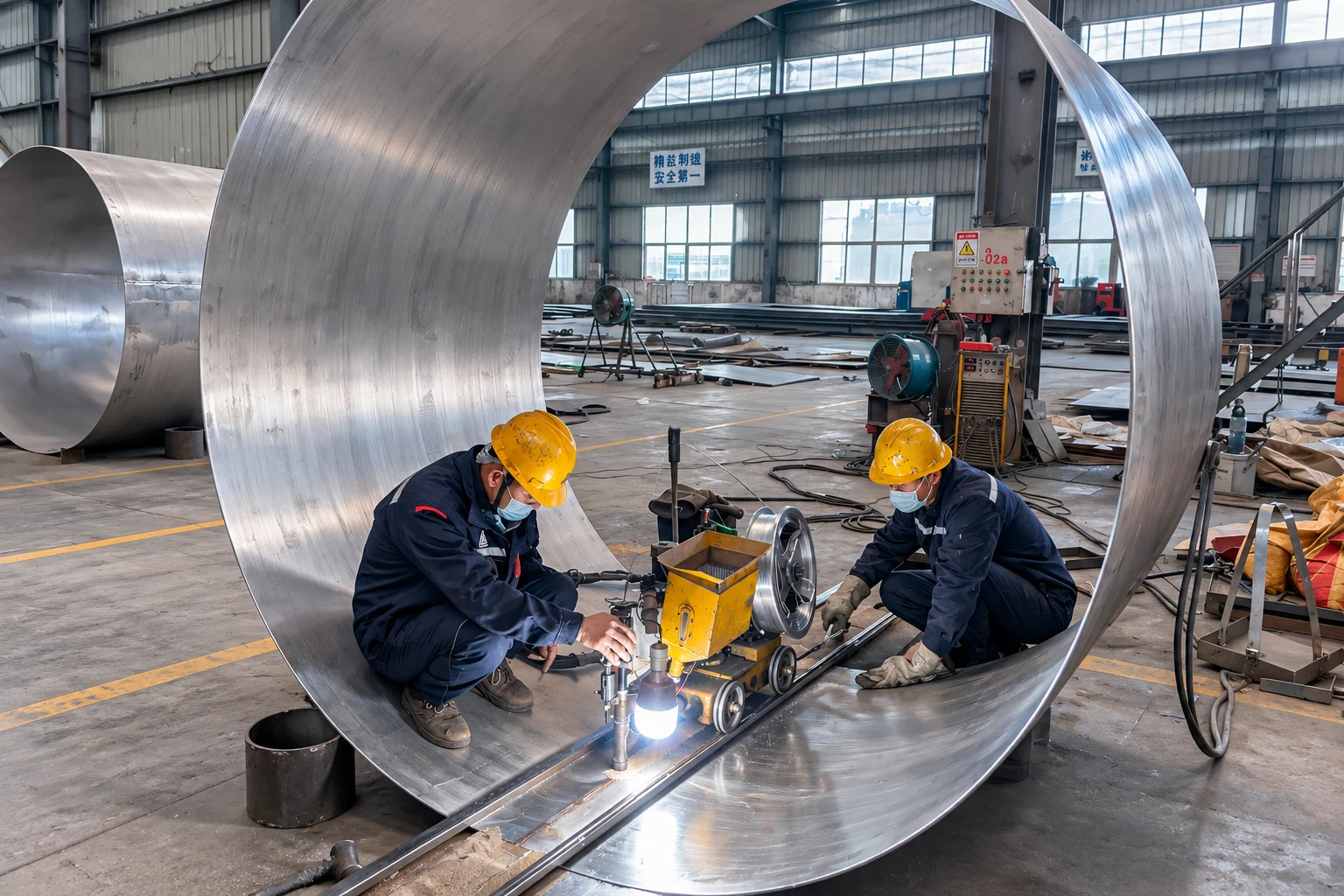
From plate preparation and structural fabrication to vehicle assembly, finishing and pre-dispatch checks.
Find out more ↗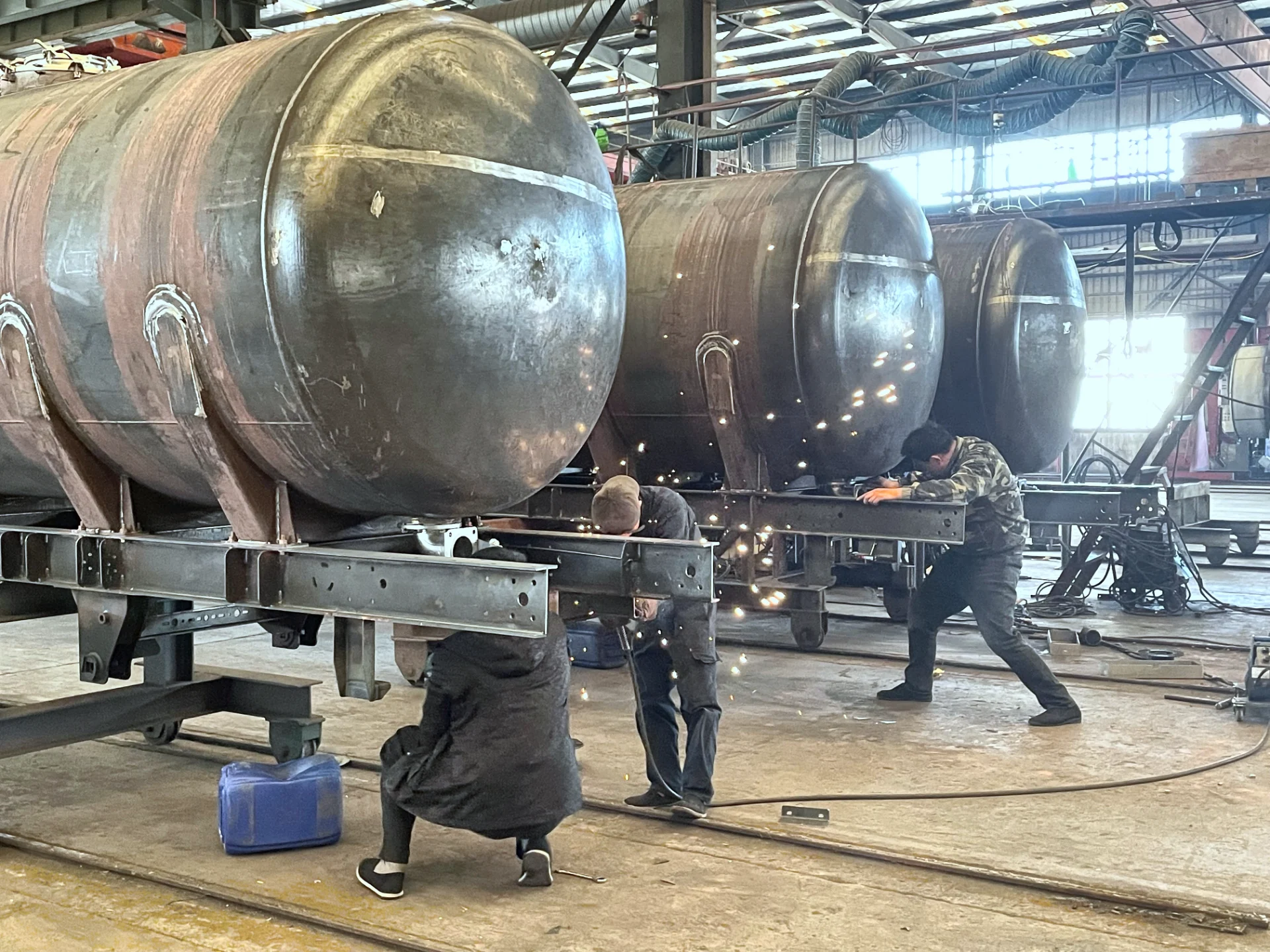
Material, structure, installed equipment and vehicle functions checked against the agreed specification.
Find out more ↗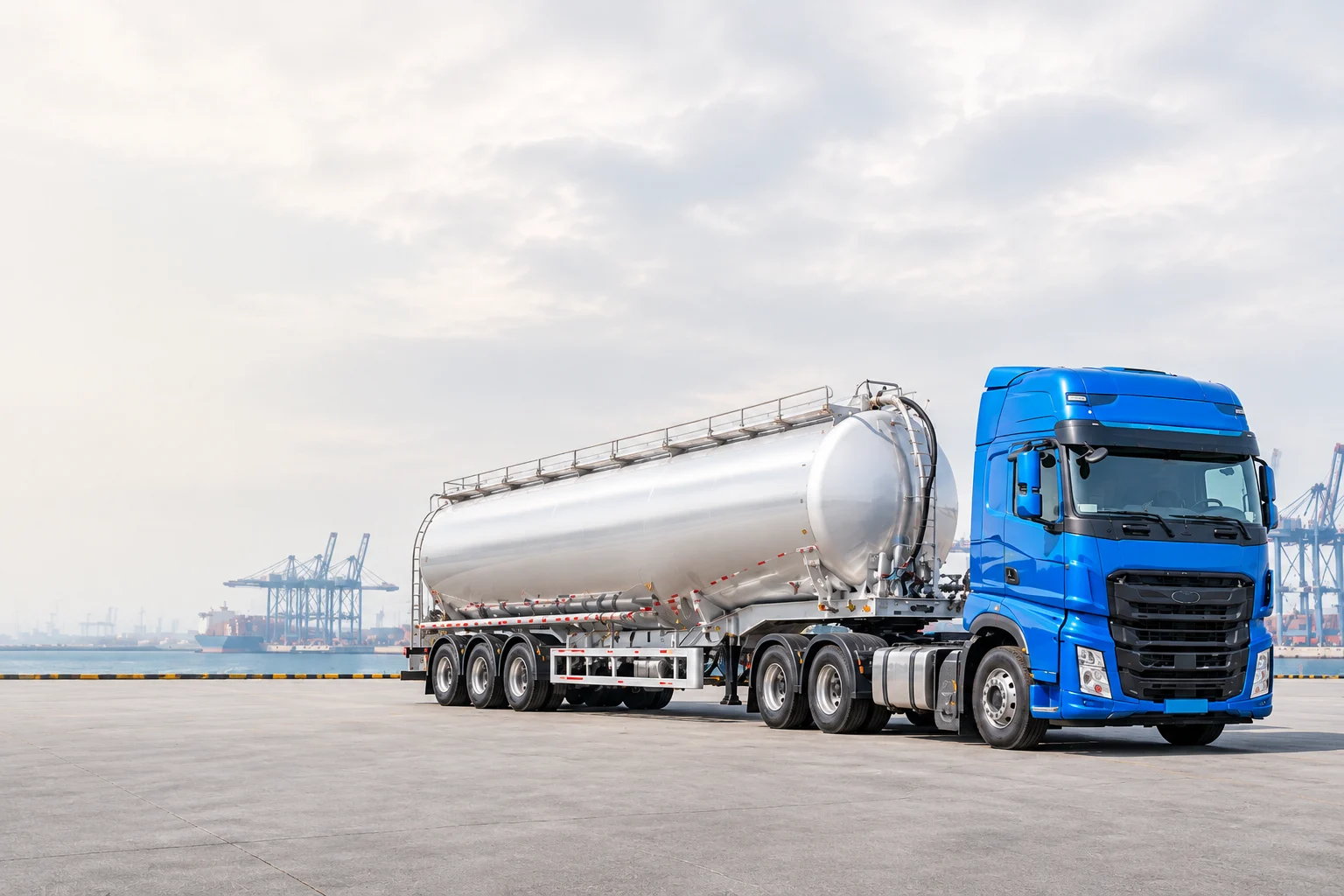
Equipment preparation, shipping arrangements and order documents coordinated around your destination.
Find out more ↗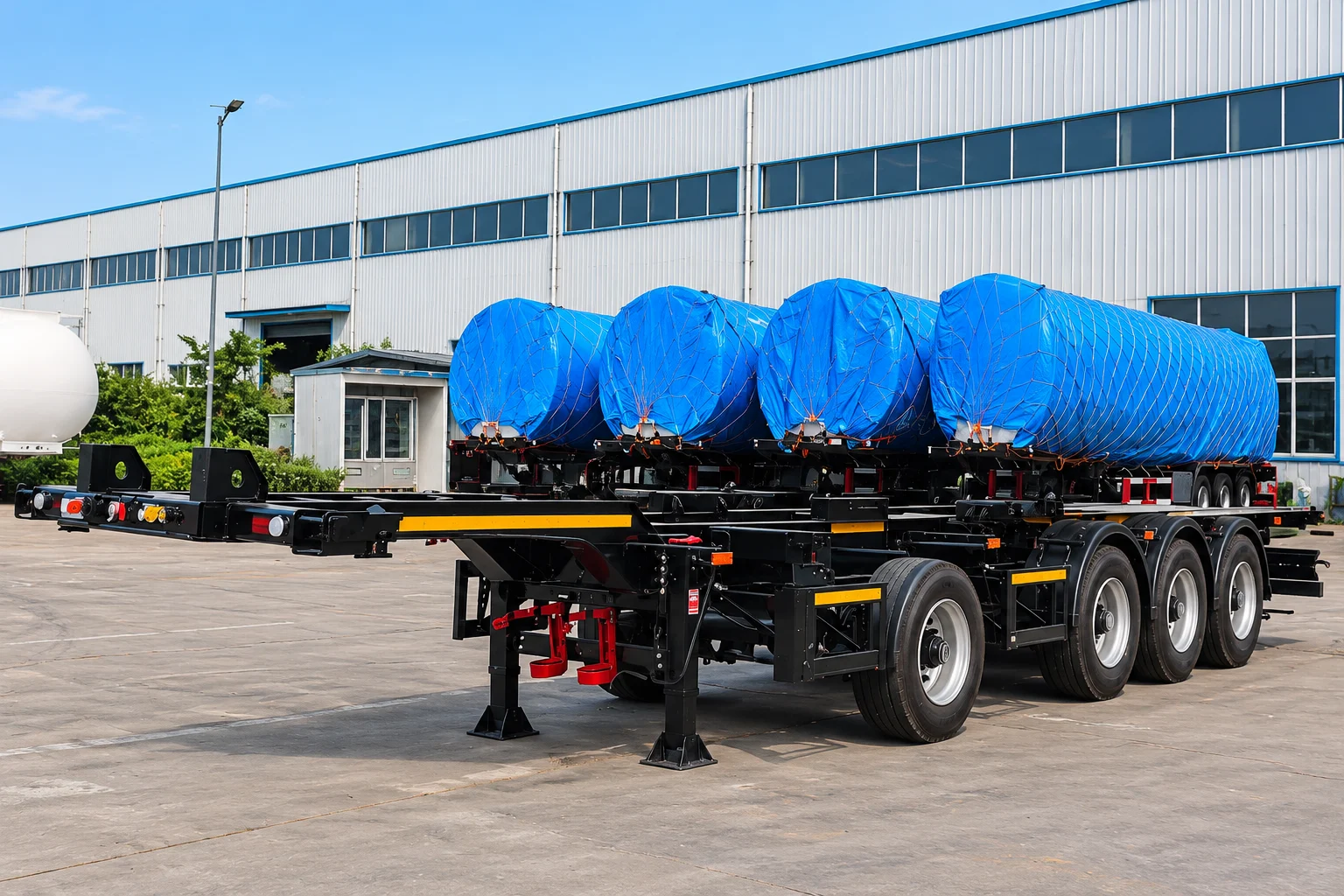
Technical enquiries and replacement-part support linked to the trailer, its components and the original order.
Find out more ↗ Get a Special Quote ↗