How to Choose the Right Bulk Cement Tanker Trailer for Your Business
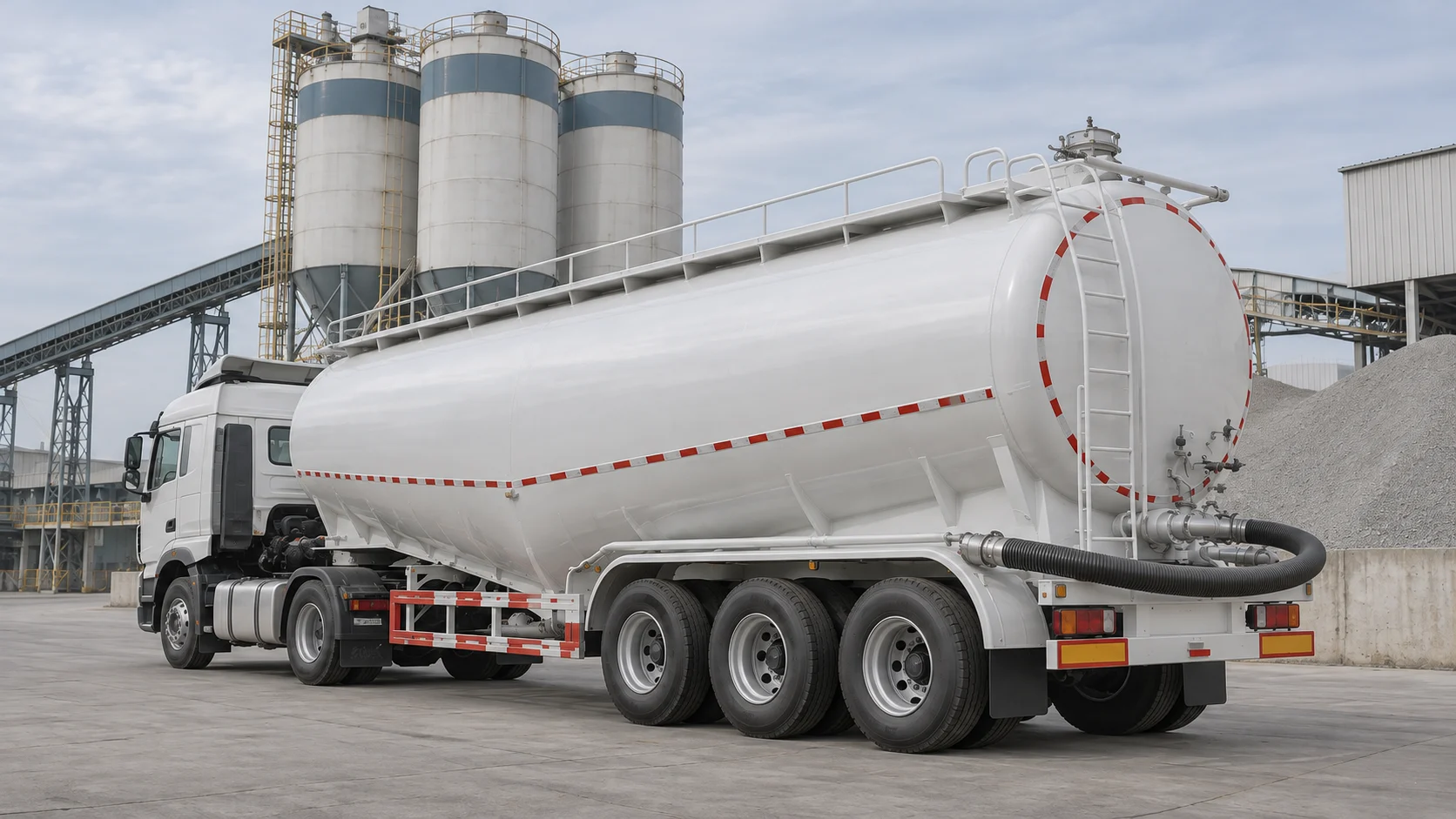
Buying a bulk cement tanker trailer is not just about choosing a tank with the right capacity. For transport companies, construction material suppliers and bulk cargo operators, the right trailer needs to match the material being transported, road conditions, loading and unloading requirements, and local transport regulations.
A suitable powder tanker trailer can make daily transportation easier, reduce unnecessary operating costs and help keep deliveries on schedule.
If you are planning to purchase a bulk cement tanker trailer, here are some important points worth considering before making a decision.
1. Start With the Material You Need to Transport
Different dry bulk materials have different transportation requirements. Cement is one of the most common materials carried by powder tanker trailers, but it is not the only option.
Depending on the trailer configuration, dry bulk tankers may also be used to transport:
Fly ash
Lime powder
Mineral powder
Other compatible dry bulk materials
Before selecting a trailer, make sure the tank design and unloading configuration are suitable for your actual cargo.
It is also important to consider how frequently the trailer will be used and whether it will carry the same material every day or handle different types of bulk cargo.
2. Choose a Tank Capacity That Fits Your Transport Routes
Capacity is one of the first things buyers look at, but a larger tank is not always the best choice.
Your decision should take into account the distance between loading and delivery points, the legal axle load limits in your target market, road conditions and the loading capacity of your transport operation.
For example, a trailer used for long-distance cement transportation may have different requirements from one working mainly between a local cement plant and nearby construction sites.
The goal is to find a balance between loading capacity, vehicle weight and overall operating efficiency.
3. Pay Attention to Tank Structure and Manufacturing Quality
The tank body is the main working component of a powder tanker trailer. Its design and manufacturing quality directly affect long-term performance.
When comparing different suppliers, pay attention to:
Tank body material and thickness
Welding quality and structural reinforcement
Internal surface treatment
Sealing performance
Manhole and access design
Discharge outlet arrangement
These details may not be obvious in product photographs, but they matter during daily operation.
Ask the manufacturer for detailed product drawings, material specifications and actual production photographs rather than relying only on general product descriptions.
4. Check the Chassis and Running Gear
A powder tanker trailer needs a reliable chassis to handle its working load and road conditions.
The configuration should be considered as a complete system, including:
Axle brand and load rating
Suspension system
Tire specifications
Brake system
Landing gear
Kingpin configuration
For buyers operating in Africa, Southeast Asia, Central Asia or the Middle East, road conditions and maintenance availability are particularly important considerations.
A trailer designed for smooth highways may not be the best choice for operations involving rough roads or frequent loading and unloading.
Discuss your actual working environment with the manufacturer before confirming the final configuration.
5. Understand the Loading and Unloading Requirements
Loading and unloading arrangements have a direct impact on how efficiently a powder tanker trailer works.
Before ordering, confirm the following details:
What equipment is available at the loading station?
What unloading equipment is used at the destination?
What type of discharge connection is required?
How much unloading time is acceptable for your operation?
Are there any special requirements from the receiving facility?
The trailer should be compatible with the equipment already used in your operation.
This is an important detail that buyers sometimes overlook when comparing prices.
6. Consider Maintenance and Long-Term Operating Costs
The purchase price is only part of the total cost of owning a powder tanker trailer.
Maintenance, replacement parts, tire consumption and unexpected downtime can all affect your operating expenses.
Before placing an order, ask the supplier about:
Availability of replacement parts
Warranty coverage
Maintenance recommendations
After-sales technical support
Delivery of spare parts to your country
A manufacturer who can clearly explain the maintenance requirements and provide practical support is often a better long-term partner than a supplier offering only a low initial price.
7. Work With a Manufacturer Who Understands Your Market
A powder tanker trailer ordered for one country may not be suitable for another without adjustments.
Road regulations, axle requirements, tractor specifications and operating conditions can vary significantly between markets.
When discussing a new order with a manufacturer, it helps to provide the following information:
Destination country
Type of bulk material
Required tank capacity
Tractor truck specifications
Preferred axle and suspension configuration
Expected operating conditions
With this information, the manufacturer can better understand your requirements and recommend a suitable trailer configuration.
Finding the Right Bulk Cement Tanker Trailer
Choosing a bulk cement tanker trailer requires more than comparing prices and capacities. Tank construction, chassis specifications, unloading arrangements and after-sales support all deserve attention.
At VANTO, we understand that different transport businesses have different operating requirements. Our team works with customers to discuss their cargo, vehicle specifications and destination market before recommending a suitable trailer configuration.
Whether you are expanding an existing fleet or purchasing your first powder tanker trailer, choosing the right configuration from the beginning can make a real difference to your daily operations.
Looking for a bulk cement tanker trailer for your business?
Contact our team with your required capacity, destination country and technical requirements. We will be happy to discuss a suitable solution for your transport operation.