
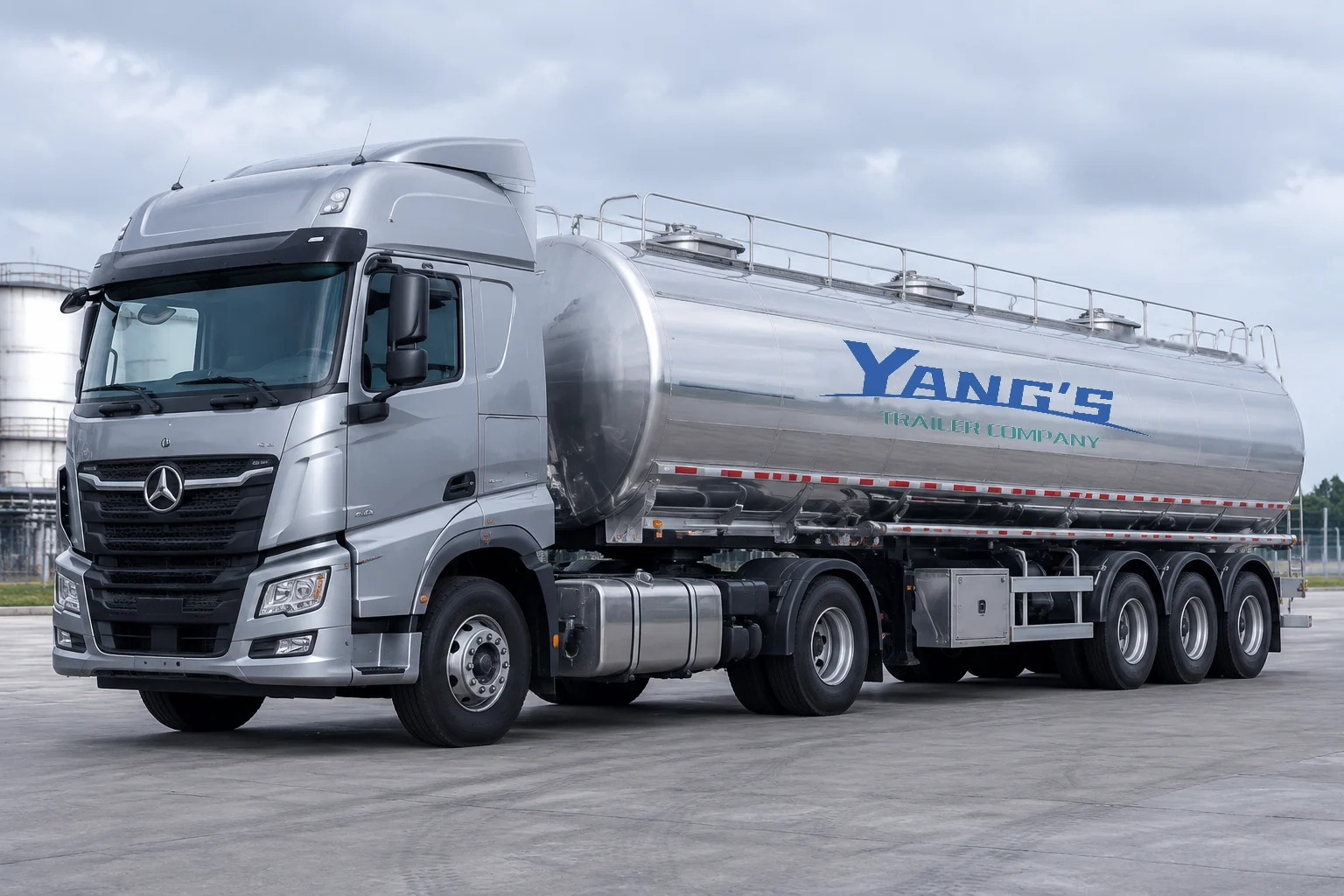
Fuel Tanker Trailer: How to Choose the Right One for Your Cargo
Investing in a fuel tanker semi-trailer is a high-stake decision for any fleet operator or logistics contractor. A mismatched specification does not just lead to operational headaches—it directly impacts payload efficiency, regulatory compliance, and cargo safety.
With various tank materials, compartment options, and regional axle-load limits on the market, how do you determine the exact setup for your transport needs? This engineering-backed guide breaks down the essential factors overseas buyers must evaluate before placing an order.
1. Define Your Cargo: Chemical Compatibility First
The first and most critical rule: your cargo dictates your tank material. Transporting diesel is fundamentally different from hauling crude oil, aviation fuel, or industrial chemicals.
- Refined Petroleum Products (Diesel, Gasoline, Kerosene): Standard carbon steel or lightweight aluminum alloy is the industry benchmark. Aluminum offers exceptional corrosion resistance against condensation and ensures zero rust contamination for clean fuels.
- Heavy Fuel Oil & Bitumen (Asphalt): Requires specialized carbon steel tanks fitted with heating systems (diesel burners or steam heating pipes) and an external thermal insulation layer (typically rock wool with an aluminum or stainless cladding) to prevent liquid solidifying during transit.
- Corrosive Acids & Alkalis (Sulfuric, Hydrochloric Acid): Requires dedicated chemical tankers, often constructed from carbon steel lined with rotational-molded polyethylene (LLDPE/HDPE) or high-grade stainless steel (316L).
- Edible Oils & Liquid Foodstuffs: Strictly mandates food-grade 304 or 316L stainless steel with sanitary-welded, mirror-polished internal surfaces to prevent bacterial buildup.
2. Tank Material Comparison: Balancing Tare Weight vs. Upfront Cost
Choosing between Carbon Steel, Aluminum Alloy, and Stainless Steel involves finding the sweet spot between initial capital expenditure and ongoing operational revenue.
| Material | Key Advantages | Primary Limitations | Best Practical Application |
|---|---|---|---|
| Carbon Steel (Q235 / Q345) | High structural strength, easy local repairs, lowest initial cost. | Heavier tare weight (reduces payload margin), susceptible to rust if unpainted. | Rough unpaved terrains, mining sites, heavy industrial fuels, budget-sensitive fleets. |
| Aluminum Alloy (5083 / 5182) | Extremely lightweight (~30–40% lighter than steel), rust-proof, higher resale value. | Higher initial acquisition cost, specialized TIG/MIG welding repair required. | Strict highway weight regulations, highway logistics, long-haul refined fuel delivery. |
| Stainless Steel (304 / 316L) | Superior chemical resistance, non-contaminating, handles high temperatures. | Premium cost, heavier than aluminum alloy. | Chemical transport, edible food oils, aviation kerosene, harsh coastal environments. |
Pro-Tip on ROI: In regions enforcing strict Gross Vehicle Weight (GVW) weighbridges, an aluminum tanker can haul 2,000 to 3,500 liters more fuel per trip compared to a carbon steel unit of the same gross weight. Over 100,000 km of annual operation, the payload bonus quickly amortizes the higher vehicle purchase price.
3. Volume, Axle Configurations, and Local Weight Regulations
A tanker trailer should never be ordered based on maximum nominal volume alone. It must be engineered backward from your local Department of Transport regulations.
- Nominal Capacity vs. Effective Volume: Liquids expand with ambient temperature. Standard international practice leaves a 3% to 5% ullage (vapor expansion space) above the liquid level. A 45,000-liter capacity tank should typically only be loaded to ~42,500–43,000 liters of fuel.
- Axle Configuration & Load Distribution: Standard configurations range from 2-axle (25,000–35,000L), 3-axle (38,000–50,000L), to 4-axle setups (up to 60,000L in specific regional jurisdictions). Ensure your manufacturer calculates the fifth-wheel kingpin load versus the rear bogie axle loads to prevent front-axle overloading on your tractor head.
4. Compartments and Anti-Surge Baffle Engineering
Liquid surge during acceleration and braking creates severe dynamic inertia, increasing rollover risk and stopping distance.
- Single vs. Multi-Compartment: If your business serves retail fuel stations, a multi-compartment design (e.g., 4 to 6 compartments, such as 10kL + 10kL + 10kL + 15kL) allows simultaneous transport of different products (RON 95, Diesel, Kerosene) on a single run without cross-contamination.
- Dish-End Surge Baffles: In single-compartment tankers, corrugated or dished wave-breaking baffles should be installed every 1.5 to 2 meters. These plates dampen longitudinal liquid surge during sudden emergency stops, protecting both the tank shell and the prime mover's transmission.
5. Critical Safety Equipment & Discharge Systems
Modern safety hardware is non-negotiable for hazardous cargo transport:
- Pneumatic Emergency Foot Valves (Bottom Valves): Located at the lowest sump of each compartment. In the event of a collision or piping rupture, these valves automatically snap shut pneumatically to lock cargo inside the tank shell.
- European-Standard Explosion-Proof Manhole Covers: Equipped with integrated pressure/vacuum P/V breather vents, emergency explosion-proof pressure relief (preventing tank rupture during a rollover fire), and optical overfill prevention sensor sockets.
- Bottom Loading & Vapor Recovery System: Eliminates hazardous top-splash loading. Vapor recovery lines channel volatile hydrocarbon vapors back to the terminal storage facility, minimizing environmental emissions and product loss through evaporation.
6. Chassis & Suspension for Harsh Operating Conditions
Road conditions in developing regions often present demanding challenges—washboard gravel tracks, potholes, and extreme ambient temperatures.
- Suspension Selection: While air suspension is mandatory in European-style regulated highway logistics for its gentle ride and tire longevity, heavy-duty multi-leaf mechanical spring suspension (e.g., 10-leaf or tandem bogie) remains the undisputed favorite for durability on unpaved African and Latin American haulage corridors.
- Frame & Kingpin Reinforcement: Look for a through-going submerged-arc welded main beam made of high-tensile steel (T700 or Q345B) to withstand continuous torsional stress on uneven road surfaces.
Summary: Your Pre-Order Specification Checklist
Before finalizing your tanker trailer request for quotation (RFQ), ensure you have clarified the following technical parameters with your engineering team:
- Cargo Type & Specific Gravity: (e.g., Diesel @ 0.84 kg/L or Sulfuric Acid @ 1.84 kg/L)
- Local Maximum GVW & Per-Axle Limits: (Ensures compliance at border weighbridges)
- Preferred Tank Shell Material: (Carbon Steel / Aluminum Alloy 5182 / Stainless Steel 304/316L)
- Compartment Breakdown: (Number of internal divisions and individual compartment volumes)
- Loading & Discharge Preference: (Top gravity loading vs. Bottom API dry-break loading with vapor recovery)
- Operating Terrain: (Paved long-haul vs. Off-road mining and unpaved secondary roads)