
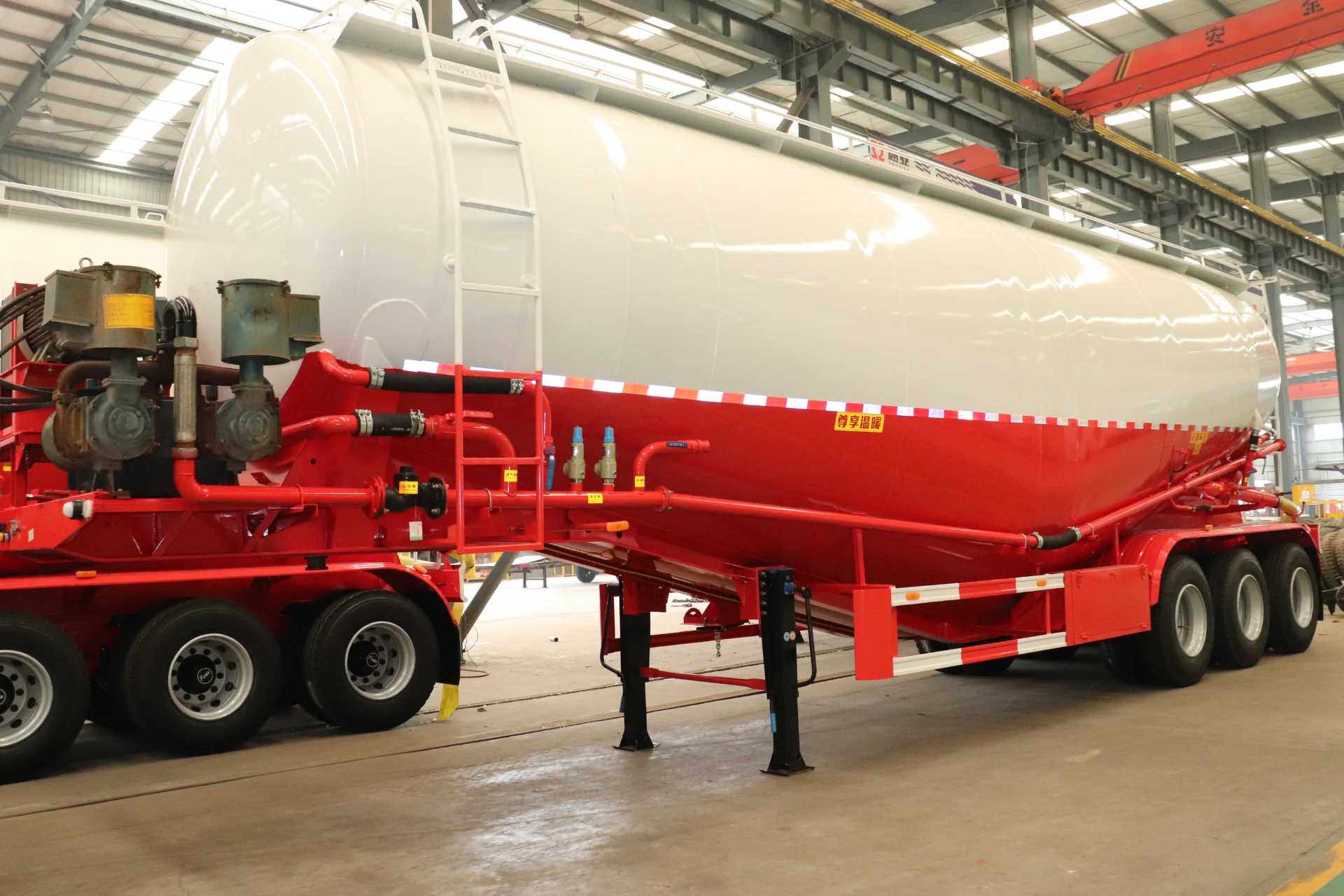
In pneumatic dry bulk transport, every extra minute spent discharging at a batching plant eats directly into fleet margins. Worse still, tank residue is not just lost cargo—it turns into permanent deadweight that burns unnecessary diesel on return trips and eventually hardens into costly blockages.
While manufacturers quote theoretical discharge rates of 1.2 to 1.5 tons per minute with residual rates below 0.3%, real-world operations in humid or rough conditions often face severe bottlenecks: unloading stretching past two hours and residue exceeding several hundred kilograms.
If your drivers report sluggish discharge or persistent clogs, use this field guide to diagnose the fluidization bed, compressor air circuit, and discharge valves before replacing expensive components.
1. Fluidization Bed & Canvas Wear: The Residue Culprit
The fluidization bed is the functional heart of any dry bulk tanker. Pressurized air enters the lower plenum chamber beneath a porous fluidizing cloth (air slide canvas), transforming dense powder into an aerated, liquid-like state that gravity-flows toward the discharge cone.
When residue spikes, internal fluidization faults are usually the primary cause:
- Canvas Channeling & Punctures: Over months of abrasive friction, synthetic fluidizing cloth can fray or tear along seam lines. Compressed air escapes through tears via the path of least resistance ("channeling"), leaving surrounding cement static and un-aerated in stubborn dead zones.
- Moisture Caking: Uncooled, moisture-laden air from an unserviced compressor causes fine cement dust on the canvas to hydrate and form a solid crust. Once canvas pores clog with hardened paste, airflow drops to zero in that section.
- Chute Angle Limitations: Tank geometry plays an indispensable role. If internal sliding plates settle or lack sufficient pitch (minimum 40° to 45° for Portland cement), material cannot slide toward the discharge outlet even under proper pressure.
Engineering Tip: As detailed in our comprehensive guide on How to Choose Bulk Cement Tanker, interior V-shape vs. W-shape geometry and fluidization chute design determine base discharge efficiency before the trailer ever leaves the factory.
2. Compressor Volume vs. The 0.2 MPa Pressure Balance
Pneumatic conveying depends on maintaining a dynamic balance between airflow volume (m3/min) and working pressure (MPa). Operating outside this window causes line choking or premature safety valve venting.
- 10 m3/min vs. 12 m3/min Displacement: A 10 m3/min compressor may handle small 30 m3 tanks discharging into low silos (under 12 meters). However, for 40 m3+ trailers discharging into standard 25-meter silos, a 12 m3/min dual-cylinder compressor (driven by an independent 4102/4105 diesel engine or heavy-duty tractor PTO) is mandatory to overcome hydrostatic backpressure.
- The 0.20 MPa Golden Rule: Never open the main discharge butterfly valve prematurely. Wait until internal tank pressure climbs steadily to 0.18–0.20 MPa (26–29 PSI). Cracking the valve below 0.15 MPa starves conveying velocity, causing heavy cement particles to drop out of suspension and clog the riser pipe.
- Chamber Pressure Balance: In dual-compartment or front/rear split designs, monitor separate pressure gauges. Balance air inlet ball valves between front and rear chambers. If the front chamber loses pressure faster than the rear, material gets driven forward or backward into corner dead spots, spiking overall residue.
3. Discharge Valves, Secondary Blow Air & Pipe Blockages
When air delivery slows mid-discharge or flow pulses erratically, the issue typically lies within the pipe manifold and valve seals:
- Discharge Butterfly Valve Wear: Cement dust is highly abrasive. A worn rubber seat ring leaks air through the discharge port during pressurization, preventing the vessel from reaching the 0.2 MPa threshold.
- Check Valve Failure: The one-way check valve between compressor and tank prevents powder from back-siphoning into the pump when the engine shuts down. If dust build-up jams this valve open, cement enters the compressor cylinders, causing catastrophic head seizure.
- Secondary Blow Air (Booster Line) Modulation: The secondary blow pipe bypasses the tank, injecting clean pressurized air directly into the discharge pipe elbow. If delivery hoses vibrate violently or feel unusually heavy, open the secondary blow valve wider to dilute the solid-to-gas ratio and boost particle velocity.
4. Emergency Procedure: How to Safely Clear a Line Choke
If the discharge hose goes rigid, material stops entering the silo, and tank pressure spikes toward 0.22 MPa, your line is choked. Never attempt to disconnect or hammer fittings under pressure. Follow this field procedure:
- Step 1: Close Material Valve Immediately: Shut the main discharge butterfly valve while keeping the diesel engine and compressor running at rated speed (approx. 900–1000 RPM).
- Step 2: Engage Full Secondary Blow: Open the secondary booster valve to 100%. Direct maximum compressor air volume down the blocked discharge line to blast the trapped plug into the receiving silo.
- Step 3: Pulse the Main Valve: Once line pressure drops and air whistles freely through the pipe, crack the main discharge valve open in 2-second bursts ("pulsing") to reintroduce small material batches into the air stream until steady flow resumes.
Regular Maintenance Checklist to Prevent Downtime
- Daily Water Drain: Purge moisture from the air compressor separator tank every morning before loading.
- Monthly Check Valve Inspection: Disassemble the check valve flapper and clean dust cake to ensure positive one-way sealing.
- Weekly Safety Relief Test: Manually pull the safety ring to verify it vents cleanly at 0.22 MPa.
Looking to optimize discharge cycles or retrofit worn fluidization beds? Contact the TONGYA Technical Team for high-grade multi-layer fluidizing belts, replacement compressor units, or customized high-efficiency dry bulk trailers.